



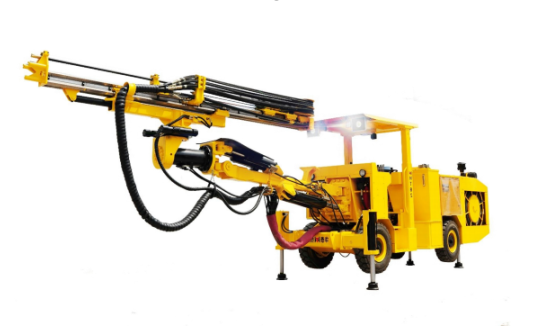
Choosing between single boom and two boom drill jumbos in small to medium size tunnel is not just a matter of buying larger unit. In order to make the right choice, one needs to take into account size of the tunnel, face width, required turning space, type of rock to be drilled, planned advance per day and how drilling crew is working. Compact underground drill jumbo could be cost efficient in very narrow heading, however two boom drill jumbo could save lot of time during drilling in cases where face is wide enough for both booms to work efficiently.
Whether you are part of a mining company, a tunnel contractor or a purchasing team, the one simple real question is: which machine will safely and efficiently drill and, subsequently, be easily moved whilst ensuring the entire drill and blast cycle is operating without any idle time?
Why Does Boom Selection Matter in Underground Tunnel Drilling?
The drilling jumbo in underground drilling is a part of a chain. One wrong link can ruin the whole shift of work. The influence of the drill jumbo on face preparation, the quality of the blast holes, the safety of the operators, mucking, support installation and the following excavation are shown in more detail.
The limitation of small to medium size underground tunnels is substantial. A machine can be very powerful on paper, but when it is set up in a tunnel’s heading, turns in crosscuts, is positioned on an uneven surface and requires space for ducting for ventilation, for cables, for water pipes and for people as well as for loaders, it can become very slow.
The drill and blast cycle leaves little room for mismatch
In normal underground operations, there are a number of steps or activities that are completed within each cycle of drill and blast. These steps include face cleaning, drilling, charging, blasting, ventilation, scaling, mucking, and ground support. The drill jumbo is typically one of the first activities in the cycle, which can be greatly impacted if the drilling time is extended, allowing the other steps in the cycle to commence late. Large machines also have a negative impact on the operation of the jumbo in the heading, by allowing considerable time to be used in positioning the booms and aligning the feed.
One boom drill jumbo may be sufficient to develop a small decline, an exploration drift, an access tunnel or a narrow orebody heading. The same does not apply to a wider mine development tunnel or medium-sized transport drift. Here, a two boom drill jumbo will in all probability be more efficient and render better results in terms of drilling time and shift performance.
What Is a Single Boom Drill Jumbo?
A single boom drill jumbo is an underground face drilling rig with one drilling boom. This type of rig is generally used for face blast hole drilling, as well as for development, in tunnels, drifts and cross-cuts. They are particularly suited to small to medium sized tunnel faces and are easily moved due to the relatively compact size of the machine body when compared to multi-boom rigs.
This hydraulic drilling jumbo is chosen by mines who need to carry out constant drilling in their tunnel without taking up too much space in the tunnel cross section.
Where a single boom drill jumbo works best
A single boom is sufficient for sites with very tight turning area, short headings or sites with limited clearance around the drill. Also, single booms are suitable for drilling patterns that do not require two booms to be operating at the same time.
Typical application scenarios include:
· Narrow mine development tunnels
· Small and medium cross-section drifts
· Access tunnels with limited turning radius
· Projects with moderate daily advance targets
· Mines that want lower equipment investment and simpler maintenance
The main advantage in a short tunnel is not necessarily the highest drilling speed. Rather it is the time saved in positioning, the lowest risk of collision and the easiest access between the tunnel faces.
What buyers should check before choosing one boom
A single boom drill jumbo should not be selected only because it costs less. Buyers need to check whether the boom can cover the full face, including crown holes, side holes, lifter holes, and cut holes. Hole diameter, hole depth, feed length, ground clearance, machine width, and tramming height all matter.
For a 3 m tunnel width, a compact set of drill units would likely be more suitable. For wider faces with many drill holes, using one boom to make a round could end up taking too long.
What Is a Two Boom Drill Jumbo?
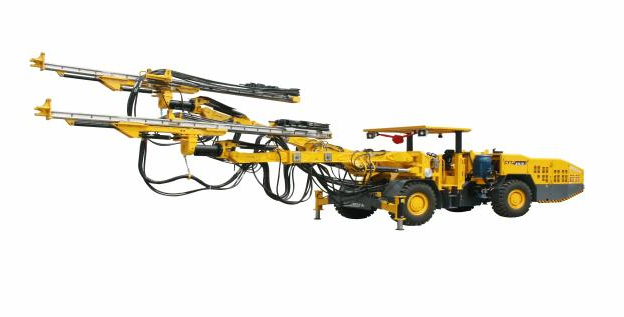
A two boom drill jumbo, also called a twin boom jumbo or dual boom drilling jumbo, has two drilling booms working on the same tunnel face. It is built for higher drilling productivity in medium underground tunnels and larger headings where the face area allows both booms to work without blocking each other.
A two boom hydraulic drilling jumbo has more value than just speed. A lot of value is also added by a wider face coverage, a better drilling rhythm and less waiting time. This value only can be realized if the crew has sufficient space and is skilled enough to make optimal use of both booms.
When two booms become more efficient
A two boom drill jumbo is useful when the tunnel face is of sufficient width so that two drilling units can work there at the same time. In a medium tunnel section of about 4m wide one boom can be drilling the left side of the face while the other is drilling the right side. Alternatively one boom can be drilling the cut holes while the other boom is drilling the perimeter holes.
Using a setup of this nature will reduce the time to complete the drilling of a round, especially in hard rock. This type of configuration is suitable for Contractors that are working to a time sensitive program, for Mines with multiple Development headings and for projects where advance in daily meters is more important than the initial cost of the machine.
Why two booms are not always twice as fast
People frequently make the error of assuming that a 2-boom drill jumbo will effectively double the rate of a single boom drill jumbo. Underground mining is never this straightforward. There are many factors influencing performance, including operator skill, rock hardness, the pre-production state of the face, the pattern, water supply, the hydraulic performance and the time spent to move the jumbo around on the face.
As tunnel dimensions do not allow for two booms to be operating in the same area, uncoordinated drilling with an additional boom will not yield the expected return on investment as one boom will have to stand idle whilst the other is drilling.
Single Boom vs Two Boom Drill Jumbo: Practical Comparison
The choice between these alternatives is mainly based on the mine plan, not on the catalog of machinery. The following table provides a field based comparison for small to medium sized underground tunnels.
| Selection Factor | Single Boom Drill Jumbo | Two Boom Drill Jumbo |
|---|---|---|
| Best tunnel size | Small to medium sections | Medium and wider sections |
| Mobility | Easier in narrow headings | Needs more working space |
| Drilling speed | Stable, but slower per round | Faster when both booms work well |
| Initial cost | Lower | Higher |
| Maintenance load | Simpler system | More boom and hydraulic components |
| Operator demand | Easier to train | Needs stronger coordination |
| Face coverage | Limited by one boom reach | Wider and faster coverage |
| Best use case | Tight tunnels, smaller mines | High-output development headings |
A single boom is typically more practical on a day to day basis for a small mine with only one active face, whereas two boom units are typically better for long term investment for a contractor such as ourselves that are to drive a number of medium size tunnels under a tight time frame.
How Does Tunnel Cross Section Affect the Choice?
The cross section of a tunnel is one of the primary first indicators of acceptability for a buyer. Is the drill jumbo going to be able to enter the tunnel, turn, drill and then exit the tunnel safely. Even if a machine just about fits within a tunnel, it can still cause problems during normal working for a number of days.
Before making a comparison between single boom loaders and two boom loaders it is best to confirm the actual tunnel configuration. This would include the floor, the roof, the amount of space required for supports, space required for ventilation equipment and duct work, and the amount of space available on the sides of the tunnel.
Small tunnel sections
A compact single boom drill is often the best option for drilling in a small underground tunnel. The ability to position the boom without the risk of it touching the roof or sidewall is crucial. Also a single boom drill enables more space in the tunnel for cables, hoses and for the personnel to work safely.
Short crosscuts, small tunnel intersections and uneven underground faces mean that you often can’t keep using the same type of drilling equipment. Simple underground face drilling is usually the answer for jobs like this, enabling you to get on with the work without delays.
Medium tunnel sections
For medium size tunnels decisions regarding numbers of drill jumbos are more detailed. One boom drill jumbo may be sufficient if production on the project is moderate. However for such a project a two boom drill jumbo may be more beneficial, especially when rounds are to be blasted with a large number of holes or increased advance rate is desired.
Medium sized transport drifts, utilizing a normal drilling pattern and sufficient face width, may be served by two booms. Medium size service tunnel using tight bends and a mix of ground types are better served by a single boom unit.
Wide or high-output headings
When working a wide face with hard rock in a tight schedule, two booms can be a big advantage. This machine is capable of drilling all the shots in a much shorter period of time than it would take to send holes out one at a time, thus minimizing the time spent charging and blasting.
Even when the drilling speed is increased, the rest of the tunnel system has to support the higher pace. Mucking, ventilation, support installation and supply of spare parts have to be performed at the same speed as before in order to achieve increased progress with the project as a whole.
Cost, Productivity, and Long-Term Value
The price of the equipment is just one factor to be taken into consideration when selecting the right tools. Low cost of the equipment can turn into high costs as the equipment hampers the daily production cycle. On the other hand, higher cost of the equipment will not result in increased productivity if the equipment cannot be operated at full capacity of the site.
The following should be included in a practical cost review for a drill: purchase price, drill rod, hydraulic parts, fuel/energy, operator training, downtime, spare parts, and meters advanced per shift.
What makes single boom units cost-effective
The Single Boom Drill Jumbo has fewer main components compared to the Double Boom Drill Jumbo. This allows for simpler and more efficient daily checks, fewer wear parts, and less pressure on service. For smaller mines this can be critical as the machine is easier to train people on, easier to move around and easily maintained by a small technical team.
A single boom can typically cover all the holes in a small tunnel section, without generating too much idle time. As a result, the cost of the additional boom is likely to exceed the benefit to the project cost.
What makes two boom units cost-effective
Drilling rounds with a 2 boom drill jumbo can save time for drilling a round. Although a 2 boom drill jumbo costs more than a 1 boom drill jumbo, a mine working long shifts and having enough faces to run a 2 boom drill jumbo continuously can spread the additional cost over more meters of tunnel.
A good return is generated from a site with trained operators, planned maintenance, an adequate supply of spare parts and good blasting practices. Two booms require a well-run operation and that’s not the case when they’re only partially used.
Key Technical Details to Review Before Buying
A buyer should request more than a price and brochure. Underground drilling equipment must match the actual tunnel and rock conditions. Small differences in size, feed length, or boom coverage can cause big problems underground.
| Technical Item | Why It Matters |
|---|---|
| Adapted tunnel section | Confirms whether the machine fits the face |
| Machine width and height | Affects tramming and turning in narrow tunnels |
| Hole diameter range | Must match blast design and rock condition |
| Hole depth | Affects round length and advance plan |
| Boom coverage | Decides whether all face holes can be reached |
| Feed force and rotation torque | Affects drilling in hard rock |
| Anti-jamming function | Helps reduce rod sticking and tool loss |
| Operator cabin and controls | Affects safety and fatigue during long shifts |
| Spare parts access | Reduces downtime after wear or failure |
A good inquiry for selecting the right underground drill jumbo for tunnel boring would include: tunnel width, tunnel height, turning radius, gradient, rock hardness, hole diameter, hole depth, required daily advance, power supply on site and local maintenance capabilities. In this way a supplier can select the best underground drill jumbo for you instead of giving very general information.
Which Drill Jumbo Fits Different Underground Projects?
Each project has different objectives for drilling. A narrow gold drift, a medium size access tunnel and a transport tunnel have different objectives and therefore different priorities for drilling.
For a narrow orebody mine space and flexibility usually will take priority over production rate. A compact single boom drill jumbo is ideal for working between faces and allows for effective operation in very narrow headings. For a medium sized tunnel project with relatively fixed drilling cycles, two boom units will save time for each round. But for a contractor working on multiple headings the factor that to give highest priority to will be equipment utilization. Only when a two boom unit is utilized enough, it will make back the extra investment.
One simple rule to make the decision is: space is the limiting factor: single boom option vs. two boom option is the drilling time the limiting factor: compare single boom option vs. two boom option.
Yantai Chi Hong Machinery Co., Ltd. as an Underground Drill Jumbo Supplier
Yantai Chi Hong Machinery Co., Ltd. is a professional manufacturer of underground mining equipment such as underground drill jumbo, underground loading machine, underground mine truck, underground rock breaker, rock drilling tool and underground mining equipment spare parts etc. We have 12 years experience in underground mining field. We set up a system of R&D, manufacturing, sales and service to meet customers’ requirement.
The production site of the company covers 96,000 m². It is staffed by over 300 people in production as well as advanced production and management personnel as well as senior technical staff. The company has received quality-related certifications. It holds the EU CE marking as well as the ISO9001:2015 international quality certification.
Service system for buyers of underground drill jumbo is as important as equipment support. Warranty, delivery time or engine hours, technical advice, regular check up within warranty period, operating and maintenance instruction, and supply of spare parts etc. are very important for mines where a stopped drill jumbo can delay blasting, mucking etc. and even the next shift.
Conclusion
A single boom drill jumbo or a two boom drill jumbo can be suitable for small to medium size underground tunnels. Each has its purpose though. A single boom unit is best for very narrow headings, very small sites where space is a problem, lower capital cost, and the ability to move the drill around on a daily basis. A two boom unit is more suited for medium size tunnel sections, faster face advance, and sites where the two booms can be productively operated by the crew.
The choice of the suitable machine has to start with the design of the tunnel cross section and not with the choice of the machine size. When comparing face length of drill jumbos with the boom reach, the drilling pattern, the rock characteristics, the maintenance capacity, the spare parts service as well as the daily advance performance, the choice is made easily: The drill jumbo is chosen which fits to the tunnel cross section, supports the whole drilling process and facilitates the underground operation in general.
FAQs
Is a single boom drill jumbo enough for small underground tunnels?
A single boom drill jumbo is suitable for many of the smaller underground tunnels, for ease of movement, positioning and use in very narrow headings. However, there are several key parameters which influence this decision. The size of the tunnel, the blast hole pattern, depth of the holes and the advance rate per shift all play important roles.
When should a mine choose a two boom drill jumbo?
A two boom drill jumbo can be a good option in a mine where the crosscut is wide and the drilling pattern is very dense. The two boom drill jumbo is ideal for advance rate in these situations and is most effective when there are good trained operators and good maintenance support.
Does a two boom drill jumbo always drill twice as fast?
The answer is No. A two boom drill jumbo may improve your drilling productivity but in the end your real output will be determined by rock quality, operator ability, boom movement, water supply & face design. In a tight tunnel 2 booms may not perform at their best.
What information should be sent before requesting a quote?
When purchasing a drill jumbo for underground use the buyer should provide the following details: tunnel width, tunnel height, rock hardness, hole diameter, hole depth, gradient, working altitude, turning space, power conditions and expected meters per shift.
Can one underground drill jumbo handle both mining and tunneling work?
Many of the hydraulic drilling jumbos are used for underground mining development and for tunnel excavation. However, a number of factors must be matched before a machine is purchased, including the size of the tunnel section and the drilling pattern to be used at the site.

 English
  Chinese
  Russian
  Spanish