



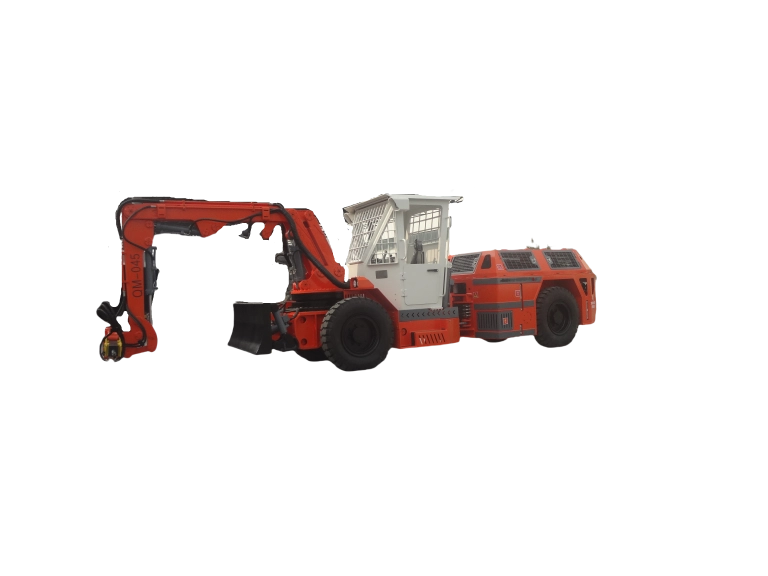
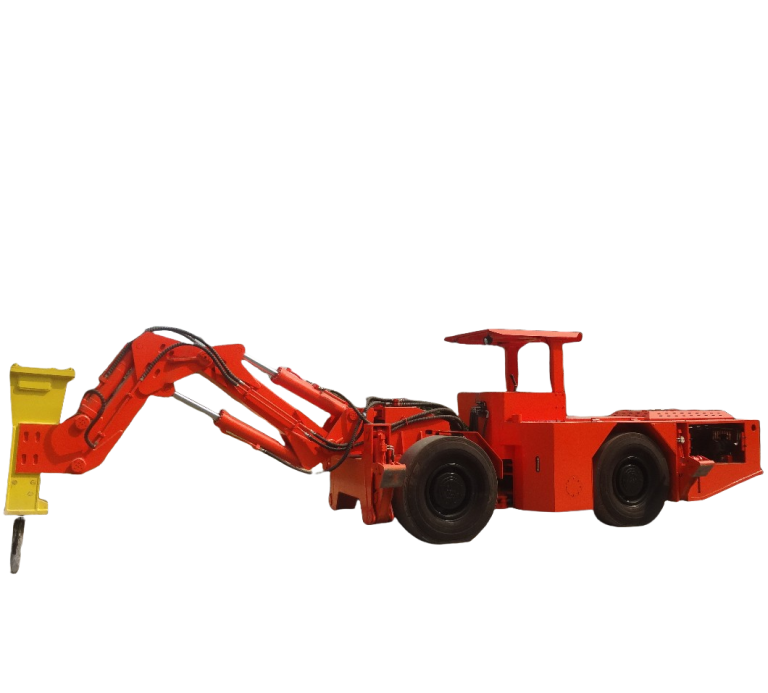
An underground pick scaler looks simple from a distance: a compact carrier, a boom, and a scaling tool that knocks loose rock from backs and ribs. In real headings, it is one of the most safety-critical machines on site. That’s also why prices can sit in very different brackets, even when two units are both labeled “underground scaling machine.”
The difference is rarely “cheap vs expensive.” It usually comes down to engineering choices that show up later as uptime, scaling speed, operator protection, and how well the machine fits a specific tunnel profile. This guide breaks down the most common price drivers seen in real mine and tunneling tenders, and it highlights what to ask suppliers so quotes are actually comparable.
Why underground pick scaler pricing varies so much
Pricing swings because this machine sits at the intersection of three cost-heavy areas: safety, hydraulics, and structure. A scaler is built to reach overhead, take repeated impact loads, and keep the operator protected while doing it. That combination pushes up material grade, fabrication time, and testing.
Another reason is that mines buy scalers for different jobs. Some want quick “spot scaling” in small drifts. Others need long, controlled scaling cycles after blasting in larger headings. A unit designed for one will look overpriced or underbuilt for the other.
Before comparing numbers, it helps to break the machine into the cost blocks that manufacturers actually price.
The engineering choices that move the base price
The biggest price differences tend to come from mechanical reach, carrier size, hydraulic capacity, and the scaling tool package.
Scaling height and boom design
Boom reach is one of the most visible cost drivers. More reach usually means more steel, thicker sections, higher-spec pins and bushings, and more stability engineering in the chassis. It also means tighter control requirements so the boom doesn’t feel “springy” at full extension.
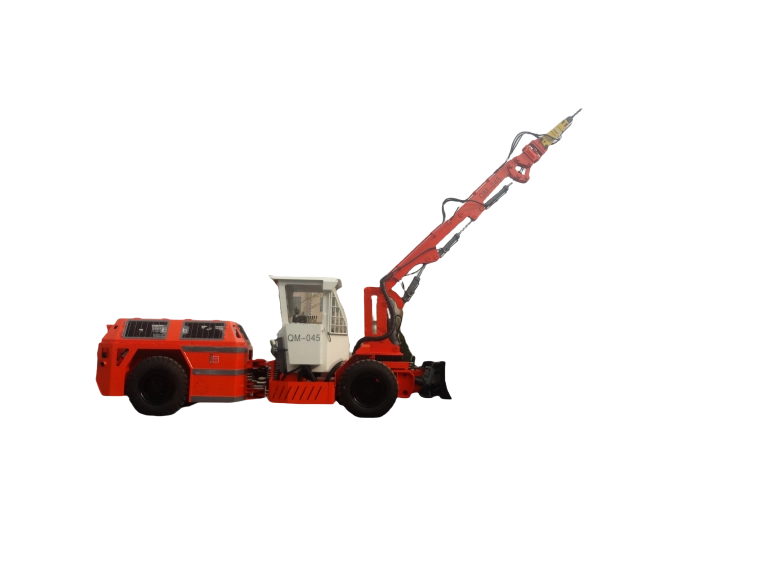
In procurement language, a small change in “effective scaling height” can trigger a major redesign. A common mid-class underground pick scaler often targets around a 6 m scaling height, while larger configurations go well beyond that. If the job needs more than the base height, the price jump is rarely linear; it can be a step change.
Boom type matters too. Telescopic designs add cost because of sliding sections, wear pads, extra hose routing, and more complex fabrication. Articulated designs can be cheaper to build but may need more space to position in tight headings.
Carrier size, turning geometry, and stability
A scaler that works in narrow headings must combine compact dimensions with stability. That’s hard. When tunnel profile is tight, the design team has less room to place counterweight, cooling, and hydraulic tanks. Packaging becomes expensive engineering time.
Turning radius is another hidden cost. Mines often ask for short turning in constrained intersections. Achieving that can mean more complex articulation geometry, steering cylinders, and frame reinforcement. Those are not “options”; they are structural design decisions.
Powertrain and cooling package
Even if two machines share the same working height, the powertrain can push pricing apart. Mines that require higher tramming speed on long declines, or that run in hotter climates, will specify stronger cooling and more robust driveline components.
Many underground pick scalers are diesel powered, and quotes often change when emissions requirements tighten. “Emission compliant underground scaler” requirements can add cost through engine configuration, heat management, and sometimes extra filtration space.
A practical detail buyers often miss: cooling reserve. A scaler that runs the scaling hammer for long cycles builds heat fast. If the cooling system is designed for short duty cycles, oil temperatures climb, seals age faster, and output drops. Better cooling costs more upfront but tends to lower hydraulic failures later.
Hydraulics: pump capacity, valve quality, and hose protection
Hydraulics is where “same machine class” can still mean different price tiers.
Pump and motor sizing affects three things buyers feel immediately: responsiveness, ability to keep steady force at awkward angles, and how much performance drops when the oil is hot. Higher-capacity pumps and better control valves cost more, but they also make the boom easier to place and keep stable under impact.
Hose routing and protection matter for underground ground support work. Poor hose protection is a frequent downtime cause because hoses see abrasion, falling rock, and sharp corners. Better designs put hoses in safer runs and add guards, which adds fabrication work and cost. Manufacturer literature for purpose-built scalers often highlights protected hose routing as a key design feature.
Scaling tool package: pick vs hammer configuration
A scaling hammer package is not just the tool. It is also the mounting, the rotation mechanism, the hydraulic circuit tuning, and sometimes a tool-change setup.
Impact energy and blow rate specifications can be a clue to cost. For example, one common configuration in the 6 m class may use impact energy in the low hundreds of joules and a blow rate roughly in the high hundreds to low thousands of blows per minute. Those performance targets require a stable hydraulic supply and a boom head designed for repeated impact loading.
Rotation and positioning also change price. A head that can rotate smoothly and hold position under load is more expensive than a simple fixed mount, but it can reduce time spent repositioning the carrier, especially when scaling in backs with uneven faces.
Safety systems and compliance add real cost
On scalers, safety features are not marketing extras; they are frequently written into mine standards.
Operator protection: canopy, cab, and guarding
ROPS/FOPS protection is one of the biggest line items after the boom and hydraulics. Enclosed cabs with better visibility, guarding, and climate control add cost, but they also support longer shifts and more consistent scaling performance.
Many purpose-built scaler pages emphasize dedicated operator protection as a differentiator for mechanized scaling.
Fire suppression, emergency systems, and interlocks
Underground requirements may specify fire suppression, emergency steering, and fail-safe braking characteristics. These are not trivial to integrate. They require certified components, installation work, and testing.
Interlocks also matter. Some mines require that the scaling tool cannot be energized unless the boom is in a safe envelope or stabilizers are set. That can add sensors, logic, and wiring complexity.
Productivity features that can justify a higher price
Price discussions often get stuck on purchase cost. In practice, mines care about cost per scaled meter and how fast headings get handed back to production.
Remote control and visibility aids
Remote control can increase price, but it may reduce exposure in loose ground and improve positioning in tight backs. The value depends on the mine’s ground conditions and operating procedures.
Some OEM product pages list radio control as an option for safer scaling at angles and hard-to-reach areas.
Diagnostics and maintenance access
Even without advanced automation, a scaler with good diagnostics and ground-level service access can be cheaper to own. The reason is simple: underground maintenance windows are expensive. A design that makes daily checks faster can reduce delays and missed inspections.
In supplier documentation, “ground-level daily maintenance” and quick service access are often positioned as major benefits.
Customization to mine conditions changes the quote
A scaler is rarely bought “off the shelf.” Mines usually specify conditions that force customization.
Heading size, grade, and ventilation
Tunnel height and width influence carrier dimensions and boom geometry. Grade affects driveline sizing and braking. Ventilation constraints can affect the acceptable engine configuration and heat output.
A scaler intended for narrow vein mining may need a lower profile, tighter turning, and careful boom packaging. Those requests usually raise cost because the design has less space to work with.
Ground conditions and duty cycle
Hard, blocky ground with frequent scaling after blasts tends to demand stronger boom head structures, heavier pins, and more robust tool mounting. Softer ground may allow a lighter spec, but it still needs stability and control.
Duty cycle is the key conversation. If a scaler runs short bursts, a base hydraulic package may be fine. If it runs long continuous scaling cycles, the quote should reflect a stronger cooling and hydraulic design.
The “hidden” pricing factors: delivery, commissioning, and support
Even when two machines have similar specs, total delivered cost can differ because of what is included in the commercial package.
Lead time, shipping, and spares
An “underground pick scaler lead time” can vary widely. Short lead time often means higher production scheduling cost or fewer customization options. Shipping terms, spare parts packages, and on-site commissioning also move the total.
For mines that run lean inventories, a starter spares kit can be worth more than a small discount on the base unit, because downtime often costs more than parts.
Training and after-sales coverage
Training is often overlooked. A scaler’s productivity depends on good positioning habits, correct tool angles, and daily checks. A supplier that provides practical training and fast technical response can reduce early-life failures.
Supplier snapshot: Yantai Chi Hong Machinery Co., Ltd.
Before making a purchase decision, many mining teams look at supplier depth, not just the scaler itself. Yantai Chi Hong Machinery Co., Ltd. is positioned as a manufacturer and supplier of underground mining equipment, with a product range that includes underground loaders, mine trucks, drill rigs, rock breakers, and underground pick scalers. The company materials describe a long-term focus on underground trackless equipment and a production base with substantial floor area and dedicated technical staff, alongside quality system certifications used in international supply.
Support terms also matter in real tenders. The company documentation describes an after-sales structure that includes a warranty-based maintenance commitment tied to delivery time or operating hours, plus service response and routine inspection actions designed to reduce equipment downtime.
Conclusion
The price of an underground pick scaler is mostly the price of risk control and productivity. Reach, hydraulics, and structure set the base. Safety systems and compliance add another layer. Then mine-specific constraints like tunnel profile, grade, and duty cycle shape the final quote. The best buying approach is to compare machines on the job they need to do: scaling height and reach, stability in the actual heading size, hydraulic performance under heat, and the supplier’s ability to keep the unit running with parts and service.
FAQs
What is the biggest factor in underground pick scaler price?
Most of the time, it is the combination of scaling height and boom design. More reach requires more structure and more stable control, which raises manufacturing cost. The hydraulic package that supports that boom is usually the next biggest driver.
Is a remote control scaling machine always worth the extra cost?
Not always. In very stable headings with good ground, the value may be limited. In loose ground, or where scaling must be done from safer positions, remote control can reduce exposure and improve positioning, which can justify the price increase.
How can two underground scaling machine quotes look similar but perform differently?
Hydraulics and cooling are common reasons. Two units may list similar reach, but the pump capacity, valve control quality, and oil cooling reserve can change real scaling speed and reliability during long duty cycles.
Does “mine scaling equipment” pricing include commissioning and training?
It depends on the supplier and the quotation scope. Some quotes include on-site commissioning, operator training, and a starter spares kit; others price the machine only. Always check what is included before comparing totals.
What should be asked in a quotation request for a rock scaling machine?
Ask for effective scaling height, boom type, hydraulic pump capacity, cooling approach for long scaling cycles, operator protection level, service access for daily checks, and the recommended spare parts list for the first year. These details usually explain most of the price difference.
 English
  Chinese
  Russian
  Spanish