



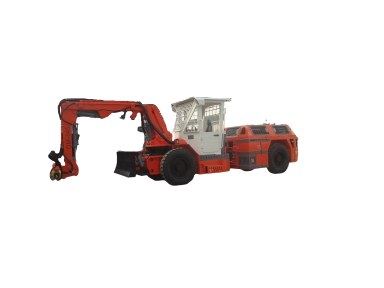
Underground mining never stops getting tougher. Tunnels go deeper, rock gets harder, and safety rules keep tightening. In the middle of all that, one machine quietly keeps the whole operation alive: the underground pick scaler.
Most people walk past it without a second thought, yet nothing moves forward without it.
What an Underground Pick Scaler Actually Does
Think of the roof and walls in an underground mine like a ceiling that’s always trying to fall on you. Every blast loosens big slabs, sharp flakes, and blocks ready to drop. That loose rock — miners call it “bad ground” — has to come down before anyone works underneath it.
That’s the job.
An underground pick scaler is a diesel or battery-driven rig with a long telescopic boom and a hydraulic breaker or pick at the end. The operator stands in a protected cab, reaches up 6–10 meters, and knocks down anything that looks ready to fall. Simple idea. Life-saving result.
But it does more than just pull loose rock:
- Clears the back (roof) and ribs (walls) after blasting
- Breaks oversized boulders that won’t fit in the loader bucket
- Digs drainage ditches and sump holes
- Lightly grades the floor so haul trucks don’t get stuck
- Sometimes even installs rock bolts or mesh in smaller headings
One machine, five or six different daily tasks.
Safety: The Biggest Reason These Machines Exist
Old-school scaling was brutal. Two guys with 12-foot pry bars, standing on a muck pile, poking the roof while dust and small rocks rained on them. One slip or one surprise slab and it was over.
Today, the operator sits inside an enclosed, FOPS-certified cab, far away from falling material. The boom does the dangerous reaching. Ground falls used to be the number-one killer underground; pick scalers pushed that number way down.
Modern cabs also come with:
- Full air filtration — no more breathing diesel fumes or silica dust all shift
- Ergonomic joystick controls — less fatigue, fewer mistakes late in the day
- Cameras and proximity sensors — you can see exactly where the pick is, even in bad light
Less risk, longer careers, happier families waiting topside.
How the Machine Changes Daily Production
A clean heading means faster work for everyone else.
Loaders move quicker when the floor is smooth and the bucket doesn’t snag on hanging rock. Drills set up faster when the face is clear. Trucks dump and turn around without waiting for someone to bar down a widow-maker first.
In narrow-vein gold or in deep polymetallic mines, the scaler often works alone for an hour after the blast, knocking the place clean. That one hour decides whether the shift hits target tonnage or falls short.
Real numbers from typical operations:
- Scaling time per blast: 45–90 minutes
- Average loose removed: 8–15 tons per heading
- Downtime saved for the rest of the fleet: 2–4 hours per shift
Do the math across a year and the scaler pays for itself many times over.
Design Features That Actually Make a Difference Underground
Tight turns, low backs, wet floors — everything fights against you down there. Good underground pick scalers are built for that reality.
| 特征 | Why It Matters Underground |
|---|---|
| Narrow overall width | Fits in 2.5 m × 2.5 m drifts without trimming ribs |
| Low profile | Clears 2.2 m backs without folding the boom every time |
| Four-wheel drive + crab steering | Turns around in its own length in dead-end headings |
| Telescopic boom | Reaches far without moving the machine constantly |
| Quick-change pick/breaker | Switch tasks in under five minutes |
| Centralised greasing | Daily service done from ground level, not on your knees |
Small details, big time savings.
Power Choices: Diesel vs Battery
Diesel still rules in most deep mines — reliable, powerful, easy to refuel. New Tier 4 or Stage V engines run clean enough that ventilation handles them without trouble.
Battery versions are catching up fast in shallower or high-ventilation-cost mines. Zero emissions in the heading, quieter, less heat. Charging happens at the portal or with fast-swap packs. Running cost can drop 40–60 % once the infrastructure is in place.
Both work. Pick the one that matches your mine’s layout and power grid.
Maintenance — Keep It Simple, Keep It Running
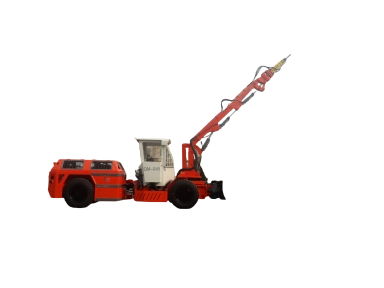
Underground machines live hard. Water, dust, shock loads every day. The best scalers are the ones you can fix fast.
Look for:
- Ground-level fluid checks and fills
- Modular hydraulic hoses that pull out in minutes
- Breaker or pick tools that change without pulling the whole boom
- On-board diagnostics that actually tell you what’s wrong
A scaler that sits broken for two shifts kills the whole cycle. One that’s back in service after lunch barely gets noticed — and that’s exactly what you want.
Choosing the Right Supplier
Not every factory understands real underground conditions. Some care more about pretty brochures than broken hoses at 2 a.m.
烟台驰鸿机械设备有限公司 has spent over 12 years building nothing but underground equipment in Yantai, China. They run their own 96,000 m² shop, hold ISO 9001, 14001, 45001, EU CE, and SGS certifications, and ship scalers, loaders, and jumbos all over the world. Their teams have worked in mines themselves, so the machines are designed for the heading, not just the showroom. Spare parts move fast, technical support answers the phone, and they stand behind every unit that leaves the yard.
结论
The underground pick scaler doesn’t grab headlines like a new jumbo or a giant haul truck. Yet day after day, it’s the machine that makes everything else possible. It knocks down danger, clears the way, and keeps the cycle moving. Mines that treat scaling as an afterthought pay for it in injuries and lost tonnes. Mines that pick a solid, purpose-built scaler and run it right see smoother shifts, happier crews, and better numbers on the board.
Next time you walk into a clean, safe heading ready for the next cut, take a second to thank the scaler — and the crew that ran it.
FAQs About Underground Pick Scalers
Q1: How often should we scale a heading?
After every blast, no exceptions. In really bad ground you might need a quick pass halfway through the shift too. Better to knock it down controlled than let it drop on someone later.
Q2: Can one 地下 pick scaler handle multiple headings?
Yes, in most mid-size operations one good scaler keeps up with two or three faces. Bigger mines or very broken ground sometimes run two units.
Q3: What’s the typical service life of an underground pick scaler?
With decent maintenance, 15,000–20,000 hours is common before major rebuild. The frame and boom last even longer if you stay on top of cracks and wear parts.
Q4: Diesel or battery — which is cheaper in the long run?
Depends on your ventilation cost and power price. In deep, hot mines diesel usually wins. In shallow mines with expensive fans or strict emission rules, battery pulls ahead after year three or four.
Q5: How much training does an operator need?
A competent loader or truck operator can learn the basics in a week. Real skill — reading the ground, spotting the dangerous stuff fast — takes a couple of months working beside an old hand.

 Chinese
  English
  Russian
  Spanish