



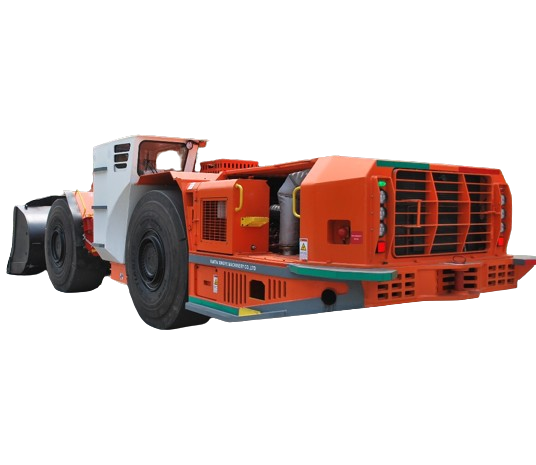
The degree to which a full bucket affects work in underground mining varies. However, in the case of low profile tunnels the affect is felt on every muck round, every ore pass trip, and every liter of fuel burned in the tunnel. By not ensuring a 铲车 is operating with a proper bucket fill factor, a crew will be moving less rock for same number of hours of machine time. As a result, there will be increased cycle time, excessive tire wear, and higher cost per tonne.
A better fill rate is created by a number of small changes such as dig angle, consistent penetration, controlled wheel slip, clean hydraulics, sharp teeth and an efficient operating technique. The differences between a busy loader and a productive loader can be very significant for an underground mine using a scooptram to load narrow drifts with a wet floor, filled with blasted rock and muck piled unevenly.
What Is Scooptram Bucket Fill Factor?
Bucket fill factor is the percentage of rated bucket volume that is loaded during loading cycles. A bucket with a rated volume of 2m3 for example would have a fill factor of around 80% if it is loaded to 1.6m3 of material each cycle.
As already stated, in most underground shifts the amount of blasted rock that is of uniform size is little to none. A heading will usually consist of a mixture of fines, slabs, oversize rocks and other pieces of rock. Sometimes the mixture can consist of sticky mud mixed with a large amount of wet fines. The loader could be operating on grade, near a brow or even in a very small corner which would make it difficult to line up with the muck pile.
| Site symptom | Likely effect |
| Bucket comes out half full | More trips for the same tonnage |
| Front tires spin during entry | Higher fuel use and faster tire wear |
| Bucket rides over the pile | Weak penetration and uneven loading |
| Material spills while reversing | Longer clean-up time and lower payload |
Start with the Right Digging Angle
How you approach the muck pile on the first pass is very important. If the bucket enters the pile too flat, the cutting edge of the bucket will push material in front of it instead of cutting under it. If the bucket enters the pile to steep, you risk running into a wall of hard rock. This can cause you to run out of speed and transfer the shock of hitting the rock into your drivetrain and hydraulic system.
Keep the approach straight and controlled
When approaching a pile of rock, endeavor to keep a straight course down the length of the drift as far as is practicable. Entry at an angle can cause one side of the bucket to fill prior to the other resulting in the material subsequently spilling from the bucket, plus unevenly loading the tires on the unit. When working in narrow veins care must be taken to refrain from making even small corrections to steering while the machine is under load as this can quickly translate into wasted power.
A practical loading pattern is simple:
- Approach the muck pile at low, steady speed.
- Keep the bucket low enough for clean bucket penetration.
- Avoid full throttle at first contact.
- Start lift and tilt only after the bucket has entered the material.
- Roll back smoothly before reversing out of the pile.
Penetration with a bucket is not a matter of forcing more into the rock. It’s a matter of letting the cutting edge, the design of the bucket and the angle of the rack do the work when it is appropriate.
Control Wheel Slip Before It Wastes the Cycle
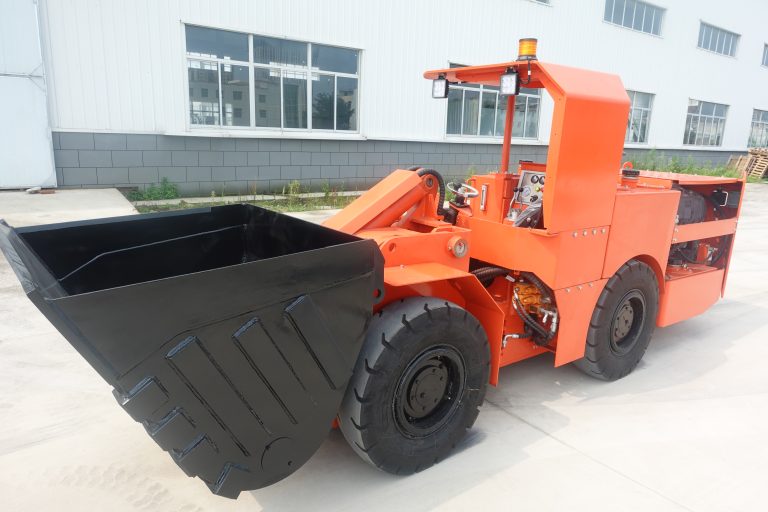
Loss of traction results in wheel slip, which in an 地下铲运机 operation not only consumes fuel but also can gouge and polish the floor, overheat tires, shorten tread life, and even cause the muck to breakdown in such a manner as to make subsequent passes more difficult.
Wheel slip on loaders can be caused by a number of factors including: wet tunnel floor, clay rich fines, steep loading faces, poor tire condition, and an over aggressive throttle foot. The use of large buckets to operate in certain material conditions and the operator’s attempt to force the bucket into oversize rock rather than repositioning for a clean attack are also common causes of wheel slip.
To recover from the front tires losing traction, ease off the gas for a second or two, lift the throttle slightly, reposition your bucket to improve angle, and re-drive the section of hill in a straight line to your next turn. Harder pressure in the direction of travel may feel to be faster in the cab but will only serve to decrease the fill factor of the final bucket of soil.
Check Hydraulic Response and Loading Power
The hydraulic performance of a loader affects the fill rate. Although a loader can be very straight and have good tractive force, it can still be very slow to lift and tilt. As a result, even though the loader may tram well, it will not follow the correct path through the pile and thus the bucket will enter slowly, stall, shake and leave full of material.
| Check point | Field warning sign |
| Hydraulic oil level | Slow lift, noisy pump, unstable tilt |
| Oil temperature | Weak response after long operation |
| Cylinder seals | Oil marks, drifting bucket, uneven movement |
| Hose condition | Cracking, leaking, pressure loss |
Loss of pressure in the hydraulic system may not immediately affect the lift and tilt function, however reduced speed will be noticable at exactly the wrong time. Small leaks in the system or contaminated oil can cause serious problems before any part of the machine fails.
Maintain Bucket Teeth, Cutting Edge and Bucket Profile
A bucket that is worn can fill very badly. When bucket teeth are worn so that the cutting edge is worn round or the bucket lip is badly damaged then more force is required to penetrate into the muck pile. This results in more wheel slip, more fuel being used and more shock to the machine.
As bucket wear is a slow process, it can easily be neglected. New ground engaging tools can change the mode of operation of the bucket within hours and already show big improvements within the first shift.
Replacement of wear parts should be based on site conditions, not hours. The ore you’re digging can be very abrasive. Wet fines can hide cracks around the lip of the bucket. Oversize rock can bend side plates and/or break welds. Our goal is to try to keep the bucket to have the original profile or as close to it as possible.
Match the Machine to the Ore and Drift
A low scooptram bucket fill factor does not necessarily mean that the operator is not doing a good job. There are times when the machine itself is not well suited to the operation of the mine. A large bucket can result in a scooptram not filling the bucket well in hard blasted material. Also, a large loader with a wide bucket can have problems maneuvering in narrow drifts and may approach the pile of material at an unfavorable angle.
Before choosing an underground LHD loader, mine teams should look at the full working area, not only rated bucket capacity. Drift width, turning radius, ramp gradient, ore density, muck pile shape, haul distance, ventilation limits, and maintenance access all affect loading efficiency.
For narrow tunnels a compact underground scooptram with a good turning circle is more efficient than a big machine that looks powerful but in practice is not. For the heavier production headings the loader needs to have sufficient traction, cooling, hydraulic power and structural ability to repeat high-fill cycles.
Operator Technique: Smooth Beats Aggressive
An experienced LHD operator can be identified from outside the cabin of his machine. He is normally moving calmly around the face. The bucket enters the pile at the same place each time and the noise of the engine is not to constantly increasing revs. The tires do not spin for long periods and each reverse maneuver is only undertaken after the bucket has been lowered and allowed to roll back under its own weight.
While it may appear that an aggressive loading method will save time, it creates many hidden losses. These losses can include large amounts of material that have been broken and then pushed under the tires, as well as material that spills from the bed of the truck. Each of these items creates additional losses as the truck must then complete additional correction moves to return to course. Aggressive loading also creates additional stress on the pins, cylinders, axles, and brakes of the truck.
A good training program for these topics would include: reading blasted rock, choosing an appropriate entry point, controlling throttle while penetrating with the bucket, co-ordinating lift and tilt of the boom and dipper, avoiding floor digging, and reporting changes in hydraulic response, tire grip and/or bucket wear.
Daily Checks That Keep Fill Factor Stable
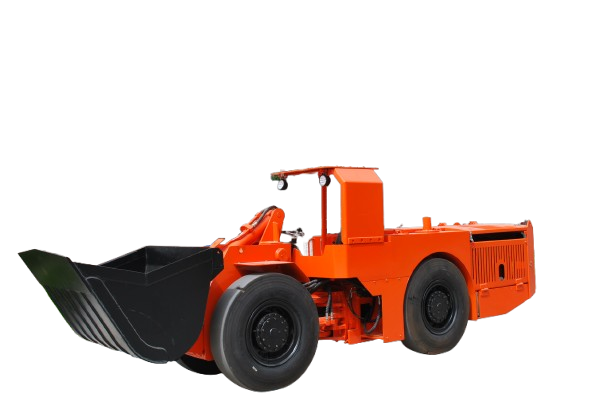
Achieving high fill factor is not just about having the best operator on shift. It is mainly about having a good machine and a good routine that can be repeated. A 10 minute pre-shift check can save so much in lost production due to small problems that have crept in over time.
Before the shift starts, the crew should check tire condition, hydraulic oil level, leaks, bucket teeth, cutting edge, steering response, brake feel, engine power, transmission response, lights, alarms, and camera visibility if fitted.
Yantai Chi Hong Machinery as an Underground Scooptram Supplier
烟台驰鸿机械设备有限公司 is manufacturer of underground mining equipment for loading, hauling, drilling, scaling and rock breaking, and also provides the corresponding spare parts and mine support equipment. The scope of underground scooptram produced by our company covers small type of underground compact LHDs and big type of underground LHDs which can be used in different size of mine drifts for different production purposes.
Our company has developed a complete system consisting of research & development, manufacturing, sales, technical service and after sales service. To underground scooptram buyers comparing suppliers, aside from a scooptram’s technical data such as bucket capacity, parts supply in the long run, maintenance tips, training to operate a scooptram and selecting the right machines are just as important.
结论
Improving the fill factor of scooptram buckets starts at the pile face but does not end there. The digging angle, bucket penetration, wheel slip, the pressure in the hydraulic system, the condition of the bucket teeth, the operating techniques of the operator and the range of machines available all impact on the load in the bucket and by improving these areas in conjunction with each other, it is possible to improve the amount of material that is moved per cycle by such machines, reduce their fuel consumption, extend the life of their tires and reduce the cost per tonne of material that they are moving.
For mine owners, contractors and equipment managers, filling up to the optimum fill factor needs to be viewed as a production metric in its own right rather than an after thought or minor detail of running a mine.
常见问题解答
What is a good scooptram bucket fill factor?
The scooptram bucket fill factor is determined by several key factors including ore type, size of material fragmentation, material moisture, scooptram bucket design, and underground loading operator skills. Typically on underground loading production shifts would like to have as high of a fill factor as possible, without excessive wheel slip, material spillage, or scooptram shock.
Why does wheel slip reduce underground loader loading efficiency?
Wheel slip is when your loader’s engine power is converted into heat or worn out tires rather than being used to move material in your bucket. Also, the muck pile will be rearranged and this can affect the next load of material that needs to be loaded. Controlling wheel spin can help to improve the amount of material that can be put into your bucket, as well as to extend the life of your tires and improve fuel efficiency.
Can a bigger bucket improve LHD loader productivity?
A larger bucket only works when the loader has sufficient breakout force, traction, hydraulic power and working clearance or drift space to fill the bucket. A bucket that is too large for the job at hand will actually decrease the amount of material that the loader can carry per cycle.
How often should bucket teeth and cutting edges be checked?
Regular inspection of bucket teeth and cutting edges should be made prior to use for each shift and after particularly demanding loading operations. Wear can be increased by Abrasive ore, Oversize rock and Wet fines. Keeping ground engaging tools sharp will aid in clean penetration of the bucket into material.


 Chinese
  English
  Russian
  Spanish